Published on November 14, 2025. Article written by . Last updated: November 14, 2025
This is Step 3 of our 5-part Storm-Proof Your Business series.
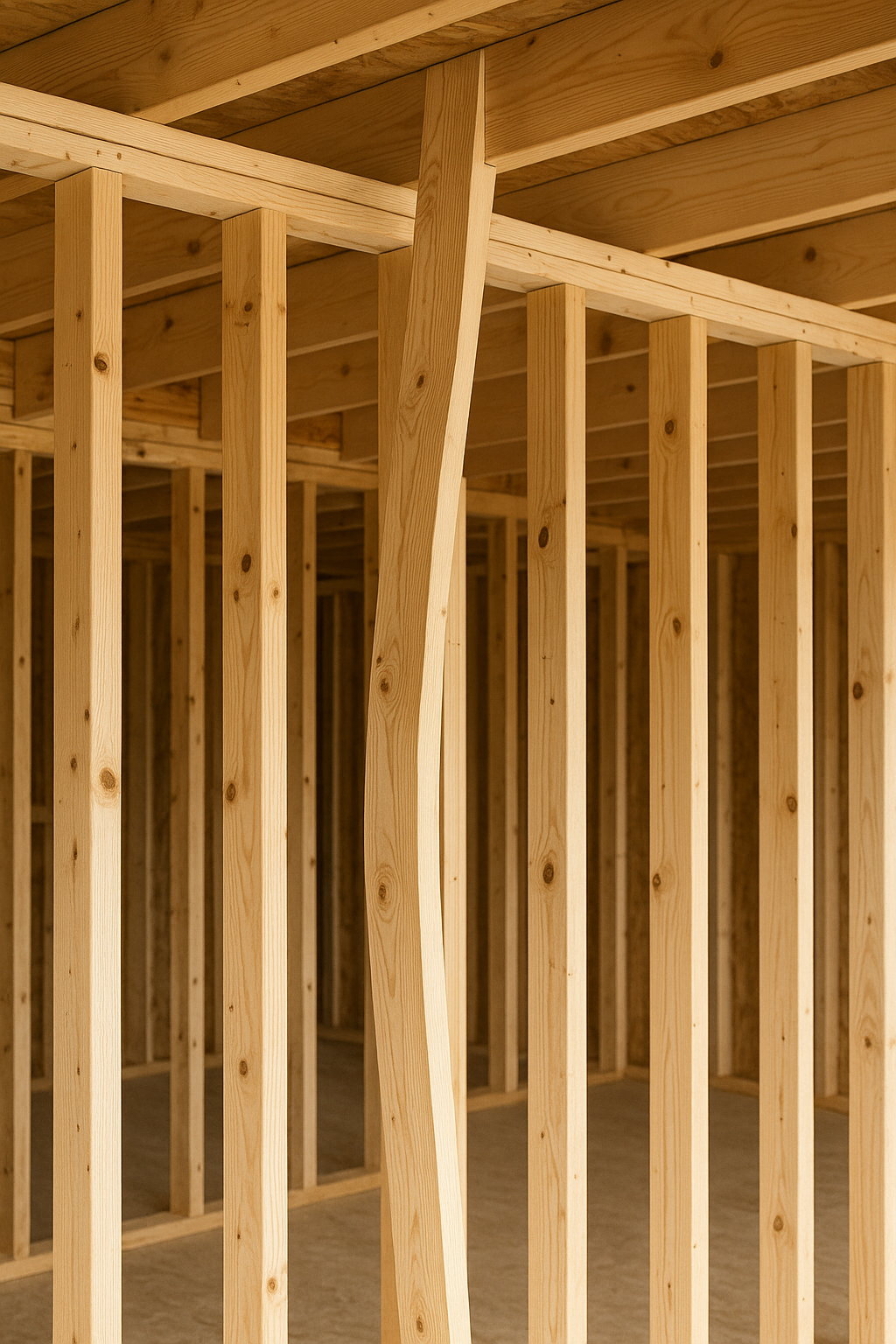
Think about the framing of a house.
You don’t notice it when it’s done right. You notice it when it’s not. The wall that bows a little. The door that sticks when it rains. The window that never sits quite square.
Small signs the structure is under strain.
Your business gives you the same clues.
The project that somehow doubled in scope after kickoff. The delivery date that moves “just one more week.” The client who’s confused about what they bought — even though you swear you told them. The team that can’t seem to get aligned no matter how many meetings you hold.
Those aren’t busy season problems. Those are framing problems. When a business grows faster than the way it’s built, everything begins to twist. Most owners shrug those things off — until the bending becomes breaking.
A construction supply company we worked with grew quickly, but every department had a different definition of “priority.” Sales pushed custom orders to hit quota. Operations was drowning because custom meant manual work. Accounting didn’t know which orders to invoice first. The owner assumed everyone was aligned because he said the priorities out loud once. They weren’t. The framing was crooked, and it showed.
Another example: a med-tech company had three teams selling three different versions of the same service because the “official” offer was last updated three CEOs ago. When clients came in, nobody knew what had actually been promised. Every project started with a debate about scope. Again — not a people problem. A framing problem.
Clarity is structural. When your team has to guess what matters, the walls start to lean.
Clarity That Doesn’t Bend Under Pressure
A construction supply company we worked with grew quickly, but every department had a different definition of “priority.” Sales was pushing custom orders to hit quota. Operations was drowning because custom meant manual work. Accounting didn’t know which orders to invoice first. The owner assumed everyone was aligned because he said the priorities out loud once. They weren’t. The framing was crooked, and it showed.
Another example: a med-tech company had three teams selling three different versions of the same service because the “official” offer was last updated three CEOs ago. When new clients came in, nobody knew what had actually been promised. Every project started with a debate about scope.
Clarity is structural. When your team has to guess what matters, the walls start to lean.
Processes That Absorb Growth (Instead of Crumbling Under It)
A fast-growing HVAC company we met hit this next wall hard. At $3M, “everyone doing it their own way” worked. At $8M, it imploded. Techs ordered materials differently. Service managers dispatched differently. Invoices went out whenever someone remembered — sometimes weeks later. Some customers got priority scheduling because the scheduler liked them. Others waited three weeks with no explanation. A $300K job was completed but never invoiced because the project folder lived on someone’s desktop who had already left the company.
A consulting firm doubled revenue in one year but never standardized delivery. Each consultant created their own method. When two resigned in the same month, half the client work became unsalvageable because no one knew where anything lived or how anything was built.
We’ve seen a dental practice lose $40K a month because insurance claims were submitted inconsistently; a landscaping business with estimates ranging from 10% to 70% margin because every estimator used their own formula; a restaurant group that couldn’t figure out food cost variance because each GM used a different ordering system.
These aren’t personality issues. They’re framing issues. Processes that don’t scale eventually collapse under weight.
A Roof That Actually Protects You
A service business grew from $4M to $6M in 18 months but hadn’t updated pricing in six years. Labor and materials rose; pricing stayed frozen. They were selling premium work at discount-store rates. Revenue climbed. Cash sank. Margins disappeared quietly because the roof wasn’t protecting anything anymore.
A homebuilder added a remodeling division because customers were asking for it. Great idea — until we looked at their contract. It covered new builds only. Nothing about change orders, delays, scope creep, or payment timing. The first tough client cost them over $120K in rework and legal fees because the contract was outdated and offered zero protection.
A trucking company added a second entity and started renting equipment back to itself without any documentation. Money moved in and out like a sloshing bucket. Their CPA was reconstructing six months of transactions at a time. Their bank froze funding because their structure looked like spaghetti.
A SaaS company paid tens of thousands in unnecessary tax each year because their entity type no longer matched their revenue model — a roof that never got updated after launch.
When the roof doesn’t match the house, storms get expensive.
Why This Matters
Owners talk about growth like “adding more rooms.” But you can’t keep adding rooms without upgrading the structure holding them up. Every new customer, new service, and new hire adds weight. Either your framing carries it… or it cracks under it.
If your business feels harder as it gets bigger — not smoother, not lighter — that’s the indicator: your framing isn’t built for the house you’re trying to live in. Fix it now, and growth stops feeling like pressure and starts feeling like momentum.
This is Step 3 of our 5-part Storm-Proof Your Business series.
Next up: turning a drafty, inconsistent operation into one that runs smoothly, predictably, and without you holding it together.
Can’t wait? Download the full Storm-Proof Your Business guide.
.
About the author:
Adam Boatsman is the Owner / Visionary at BGW Advisors.
CPA License: NC #34370
Learn more about Adam and the rest of our team on the Team page.