
Published on July 24, 2025. Article written by .
Does a franchise audit stress you out? Is it your business boogeyman? This article will explain why franchise auditing and assurance processes matter and what you can expect when audited.
A Protected Investment
Investing in a franchise allows you to buy into a proven business model. You benefit from the chain’s established brand recognition and ongoing support.
As a franchisee, you agree to uphold certain standards to protect the brand’s reputation and financial stability. That’s where franchise audits come into play. A franchise audit isn’t something to fear. It benefits both you and the franchisor.
Franchise audits are about more than checking your financials. They ensure everyone in the system operates consistently and protects the brand for maximum profitability.
When you embrace the audit process, you set yourself up for better performance, stronger compliance, and a healthier relationship with your franchisor. Understanding why these audits matter and what to expect can help you approach them with confidence rather than anxiety.
The Purpose Behind Franchise Audits
Franchise audits serve several critical purposes.
Fee and Sales Accuracy
First and foremost, franchise audits ensure that you’ve accurately calculated and paid your royalty fees and advertising contributions. Franchisors rely on these to fund brand development, support programs, and national marketing campaigns that benefit the entire network. Second, they verify that you’ve correctly reported sales and paid fees according to the franchise agreement.
Quality Control
Audits also assess operational compliance. When you bought into the franchise, you agreed to uphold brand standards—everything from customer service protocols to signage and product quality.
The audit provides a structured way to review whether you and other franchise owners have met and maintained these standards across locations. Operating in a way that’s out of alignment with the brand’s expectations could hurt your location and damage the broader brand reputation.
In short, audits protect the brand and the system as a whole. They ensure that every franchisee plays by the same rules, giving everyone a fair chance to succeed.
What to Expect During the Audit Process
Understanding what happens during a franchise audit can take a lot of the stress out of the experience. Here’s a rundown on what to expect:
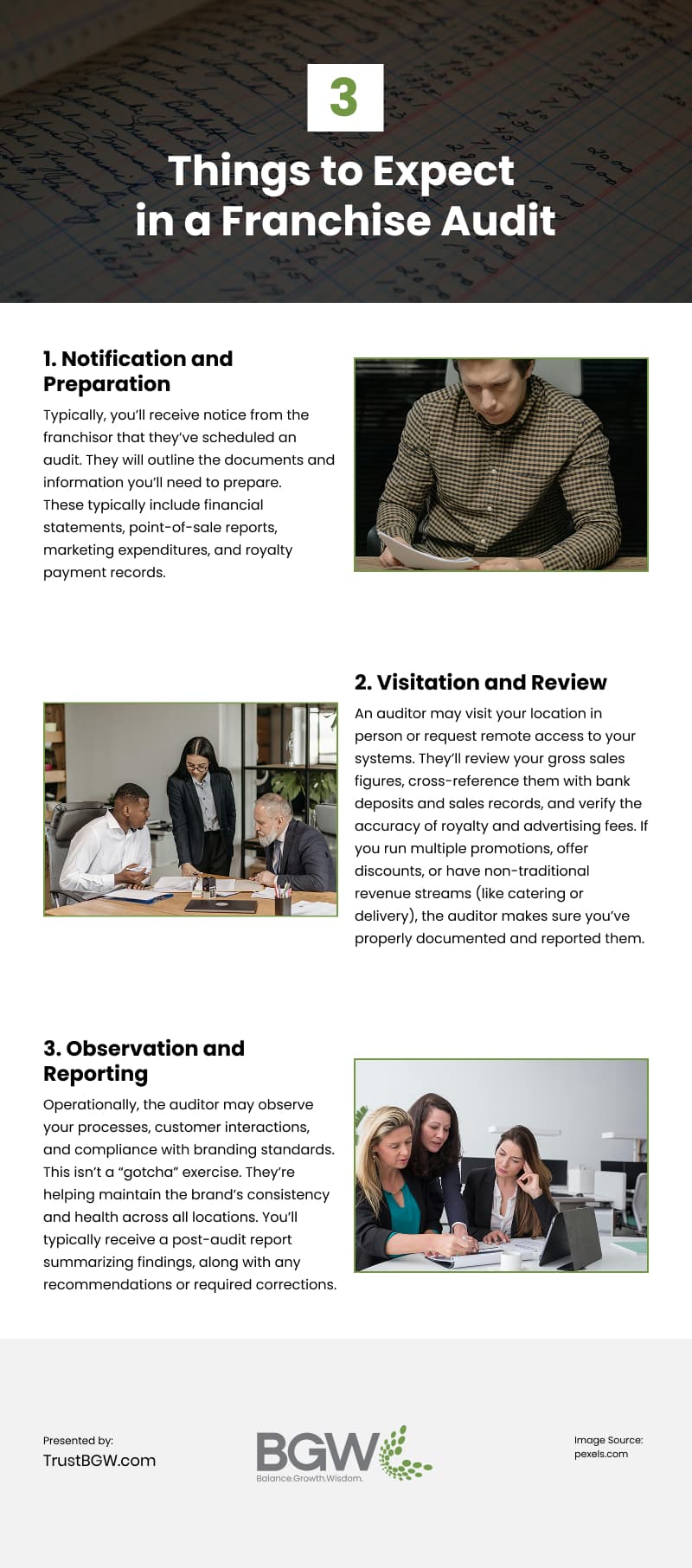
- Notification and Preparation: Typically, you’ll receive notice from the franchisor that they’ve scheduled an audit. They will outline the documents and information you’ll need to prepare. These typically include financial statements, point-of-sale reports, marketing expenditures, and royalty payment records.
- Visitation and Review: An auditor may visit your location in person or request remote access to your systems. They’ll review your gross sales figures, cross-reference them with bank deposits and sales records, and verify the accuracy of royalty and advertising fees. If you run multiple promotions, offer discounts, or have non-traditional revenue streams (like catering or delivery), the auditor makes sure you’ve properly documented and reported them.
- Observation and Reporting: Operationally, the auditor may observe your processes, customer interactions, and compliance with branding standards. This isn’t a “gotcha” exercise. They’re helping maintain the brand’s consistency and health across all locations. You’ll typically receive a post-audit report summarizing findings, along with any recommendations or required corrections.
Why Audits Are in Your Best Interest
Naturally, you may feel a little defensive when someone scrutinizes your business. However, franchise audits actually serve your best interests. Compliance assurance strengthens the brand, which in turn boosts your business. A strong brand reputation drives customer loyalty, repeat business, and new customer acquisition, which helps your bottom line.
Additionally, audits can uncover issues you might not even realize exist—a POS system that misreports discounts or an out-of-compliance marketing requirement that could lead to customer confusion. Identifying and fixing these problems early helps you avoid larger issues down the road, such as franchise termination disputes or loss of brand equity.
You should also view the audit as a learning opportunity. It’s a chance to get feedback from experts who care about your success. Taking their recommendations seriously shows professionalism and signals to the franchisor that you’re committed to being a model franchisee. As a nice bonus, it also helps you improve operations and processes.
Common Issues Audits Uncover and How to Avoid Them
While most franchisees operate with integrity, mistakes can happen. Some common issues that audits reveal include:
- Underreporting of Gross Sales: Sometimes due to system errors, manual miscalculations, or misunderstanding of gross sales.
- Incorrect Application of Discounts: Failing to include discounted sales in gross sales reports can cause underpayment of royalties.
- Noncompliance with Brand Standards: Deviating from product preparation guidelines, store layouts, or marketing materials can create brand inconsistency.
Minimize risks by regularly reviewing your franchise agreement, conducting internal audits, training your staff on compliance, and communicating closely with your franchisor. Your proactivity helps ensure that an external audit is just a formality rather than a cause for concern.
Practical Steps for a No-Sweat Franchise Audit
Preparation allows for a smooth and stress-free audit experience. Implement the following actionable steps right now for a less stressful audit.
Keep Accurate Financial Records. Regularly reconcile your sales, bank deposits, and royalty reports to ensure everything matches.
Stay Up-to-Date With Brand Requirements. Review operational manuals and marketing guidelines periodically to ensure compliance.
Train Your Team. Make sure employees understand brand standards, customer service protocols, and the importance of data accuracy.
In addition, internal reviews should be treated as routine. If you conduct mini-audits throughout the year, you’ll catch and correct errors before they become bigger issues during the franchisor’s official audit.
The Long-Term Value of Franchise Audits
Franchise audits contribute to stronger franchise systems, better-performing businesses, and higher resale values.
Also, a track record of clean audits can significantly boost your valuation if you ever decide to sell your franchise location. Prospective buyers and investors want reassurance that your financials are accurate and that your operations align with brand standards.
Furthermore, franchisors often use audit data to refine support programs, marketing initiatives, and system-wide improvements. By participating fully and openly in the audit process, you help strengthen the entire franchise network, which benefits you and your fellow franchisees.
A Proven Business Model
Franchise audits aren’t designed to trick you. They’re designed to protect and strengthen the brand you’re a part of. Embracing the audit process, rather than fearing it, positions you as a serious, committed business owner in it for the long term.
Stay organized, follow brand guidelines, and treat audits as learning opportunities. Doing so protects your investment and actively contributes to the franchise system's success.
You can also hire a certified public accounting firm to provide more peace of mind and support through an audit. So, the next time you receive notice of an upcoming audit, take a deep breath, gather your records (or have your accounting firm do it), and approach it with confidence. Because at the end of the day, a strong brand is your strongest business asset.
Video
Infographic
Franchise audits can feel overwhelming, but understanding the process helps reduce anxiety. These audits play a vital role in maintaining brand integrity, financial accuracy, and operational consistency across all locations. This infographic breaks down what you need to know.